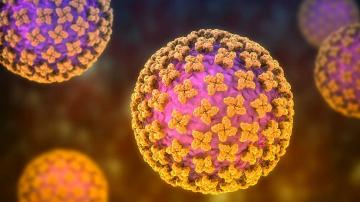
On 2 May 2026, a cluster of passengers with severe respiratory illness aboard a cruise ship was reported to the World Health Organization. The ship is carrying 147 passengers and crew. As of 4 May 2026, seven cases (two laboratory confirmed cases of Hantavirus and five suspected cases) have been identified, including three deaths, one critically ill patient and three individuals reporting mild symptoms. Illness onset occurred between 6 and 28 April 2026 and was characterized by fever, Gastrointestinal symptoms, rapid progression to pneumonia, acute respiratory distress syndrome and shock. Further investigations are ongoing. The outbreak is being managed through coordinated international response, and includes in-depth investigations, case isolation and care, medical evacuation and laboratory investigations. Human Hantavirus infection is primarily acquired through contact with the urine, faces, or saliva of infected rodents. It is a rare but severe disease that can be deadly. Although uncommon, limited human to human transmission has been reported in previous outbreaks of Andes virus (a specific species of Hantavirus). WHO currently assesses the risk to the global population from this event as low and will continue to monitor the epidemiological situation and update the risk assessment. Description of the situation On 2 May 2026, WHO received notification from the National International Health Regulations (2005) (IHR) Focal Point of the United Kingdom of Great Britain and Northern Ireland (hereafter referred to as the United Kingdom) regarding a cluster of severe acute respiratory illness, including two deaths and one critically ill passenger, aboard a Dutch-flagged cruise ship. On 2 May 2026, laboratory testing conducted in South Africa confirmed Hantavirus infection in one patient who is critically ill and in intensive care. On 3 May, one additional death was reported. A further three suspected cases remain on board. As of 4 May, a total of seven (two confirmed and five suspected) cases, including three deaths, have been reported. The vessel departed Ushuaia, Argentina, on 1 April 2026 and followed an itinerary across the South Atlantic, with multiple stops in remote and ecologically diverse regions, including mainland Antarctica, South Georgia, Nightingale Island, Tristan da Cunha, Saint Helena, and Ascension Island. The extent of passenger contact with local wildlife during the voyage, or prior o boarding in Ushuaia remains undetermined. The vessel carries a total of 147 individuals, including 88 passengers and 59 crew members. Onboard passengers and crew represent 23 nationalities. As of 4 May 2026, the vessel is moored off the coast of Cabo Verde. Summary of cases: Case 1: An adult male developed symptoms of fever, headache, and mild diarrhea on 6 April 2026 while on board the ship. By 11 April, the case developed respiratory distress and died on board on the same day. No microbiological tests were performed. The body of the passenger was removed from the vessel to Saint Helena (a British Overseas Territory) on 24 April. Case 2: An adult female, who was a close contact of case 1, went ashore at Saint Helena on 24 April 2026 with gastrointestinal symptoms. She subsequently deteriorated during a flight to Johannesburg, South Africa, on 25 April. She later died upon arrival at the emergency department on 26 April. On 4 May, the case was subsequently confirmed by PCR with Hantavirus infection. Contact tracing for passengers on the flight has been initiated. Cases 1 and 2, had travelled in South America, including Argentina, before they boarded the cruise ship on 1 April 2026. Case 3: An adult male presented to the ship's doctor on 24 April 2026 with febrile illness, shortness of breath and signs of pneumonia. On 26 April, his condition worsened. He was medically evacuated from Ascension to South Africa on 27 April, Where he is currently hospitalized in an Intensive Care Unit (ICU). Laboratory testing on an extensive respiratory pathogen panel was negative; however, polymerase chain reaction (PCR) testing confirmed Hantavirus infection on 2 May 2026. Serology, sequencing and met genomics are ongoing. Case 4: An adult female, with presentation of pneumonia, died on 2 May 2026. The onset of symptoms was on 28 April, with fever and a general feeling of being unwell. Three suspected cases have reported high fever and/or gastrointestinal symptoms and remain on board. Medical teams in Cabo Verde are evaluating the patients and collecting additional specimens for testing. Public Health Response Authorities from States Parties involved in the management of the event to date – Cabo Verde, the Netherlands, Spain, South Africa and the United Kingdom - have initiated coordinated response measures including: Ongoing engagement between WHO and the National IHR Focal Points of Cabo Verde, the Netherlands, South Africa, Spain and the United Kingdom, to ensure timely information sharing and coordination of response actions. WHO shared information about the events with National IHR Focal Points globally. Passengers onboard have been advised to practice maximal physical distancing and remain in their cabins where possible. Epidemiological investigations are underway to determine the source of exposure. The National IHR Focal Point of Argentina shared the passenger and crew lists with the National IHR Focal Points of the respective countries, according to each person’s nationality. In line with the Working Arrangement between the WHO Emergency Medical Team (EMT) Secretariat and the EU Emergency Response Coordination Centre (ERCC), the EMT Secretariat has launched formal discussions to support the clinical management and medical evacuation of symptomatic passengers. Logistic support has been provided, including sample collection items. Laboratory testing and confirmation of Hantavirus infection have been conducted at the National Institute for Communicable Diseases (NICD) of South Africa. Serology, sequencing and met genomics are ongoing. Additional laboratory samples from symptomatic passengers are being sent, with WHO support, to the Institute Pasteur de Dakar, Senegal, for testing. WHO has activated three-level coordination and is supporting national authorities in implementing risk-based, evidence-informed public health measures in accordance with the provisions of the IHR and related WHO technical guidance documents.
የሲዳማ ክልል መንግስት ጤና ቢሮ ለተጨማሪ የመረጃ አማራጮች ይመልከቱ
Website:-https://www.shb.gov.et
Facebook:-https://www.facebook.com/share/1EUdJhqmFM/ https://www.facebook.com/1000649355740¡57/posts/1065870482254128/
Telegram:-https://t.me/SidamaRHB
Twitter:-https://x.com/sidama_health_bureau
WhatsApp:-https://chat.whatsapp.com/K7W4vwM1mqG8SyGz4PYC71
YouTube:-https://youtube.com/@sidamahealthbureau?si=bjGP9rGIpwIlZWQX Tik Tok: https://vm.tiktok.com/ZMBCWXXxa/